
How being online changed my life.
I don’t remember how it started, but Husband and I have this stupid joke; any time something on the internet goes wrong in any random way (the banking app is on the fritz; someone is mean on social media; there’s a news story about Meta murdering cute, tiny kittens again), one of us will roll our eyes and say “Thanks, Tim Berners-Lee”.
I guess this habit grew out of that Thanks, Obama! meme that blamed Obama for everything from tax increases to burnt toast. The point, in case it needs saying, is that people will blame “the internet” for all kinds of things that are not, in fact, the fault of “the internet” at all.
It’s no surprise if that rings several bells for you right now. We’re being sold the story that “the internet” is dangerous, and children need to be protected from it. The only way to do this, we’re told, is to regulate who can access “the internet” and how.
There’s been a lot of good stuff written about the smoke and mirrors of this narrative. The UK’s Online Safety Act (2023) supposedly “protects children and adults online” and is, so the government claims, designed to “protect freedom of expression”. But the Act has been criticized for creating a less open and free internet while neglecting to target the most harmful behaviours of major commercial companies online. As the Open Rights Group explains, the Act places a disproportionate legal burden on small, volunteer-run websites; has a chilling effect on the publication of perfectly legal online content while failing to prevent what is actually illegal; and encourages the dominance of large, commercial platforms.
More recently, a push towards requiring age verification forces adults to provide sensitive personal information such as government-issued ID and facial scans in order to access the web freely. The major effects of this kind of technologically-illiterate approach are to exclude people who fall between the cracks when it comes to the “right kind” of ID for checks, to increase the chance of sensitive information being leaked online, and to restrict freedom of speech. In the end, this is all just security theatre, a way for politicians to claim they are doing something while avoiding fighting the real battle against surveillance capitalism.
I don’t like any of this. I particularly dislike the demonization of online communities, as though toxic behaviour and predatory commercial interests are an internet-exclusive problem that will magically disappear from children’s lives if we can just keep them away from the web. Sure, the internet has facilitated or concentrated or exacerbated many types of nasty behaviour. But those behaviours were always there. And the internet has equally allowed a lot of people to escape from toxic home lives or toxic communities or toxic governments, whether it’s the psychological escape of being online or the physical escape of finding help and support to get themselves somewhere safer.
Personally, I love the ways the internet has changed my life. Husband and I realized, a couple of years into our relationship, that I had been obsessed in my early twenties with the font archive website he used to run. He had been contributing value to my life over a decade before we even met, setting a precedent that he’s lived up to many times over.
Updating my online relationships IRL has tended to go well for me; I think it helps me sidestep the initial social ridiculousness that the ’tism has blessed me with. Even if I’m seeing this human body in front of me for the first time, I already know the person who’s piloting the body around; and that’s the real person. Somehow, that helps. In that sense, online communities are almost more real to me than offline ones: the people I meet online are just themselves, without all the baggage of physicality and social context.
This digression aside, I don’t think I can add anything very helpful to the many analyses of internet censorship attempts I’ve already linked, or the many others that explain in detail why these approaches are both ineffective and a threat to the open web and user privacy, all while avoiding taking substantive action against the tiny number of dominant online platforms whose malignant, predatory behaviour is undoubtedly the most pressing problem with the modern web.
But I do want to tell you about something that happened to me on social media. If you have a sinking feeling when you read those words, I don’t blame you. Most stories about a thing that happened on social media are somehow unpleasant, whether it’s a nasty interaction with a friend of a friend who very sincerely believes that women shouldn’t have opinions, or an algorithm that pushes people into a real-life genocide.
But I’m not going to tell you about anything to do with Facebook, or TikTok, or the X formerly known as Twitter. This thing happened on Mastodon, which is a decentralized platform for social networking, bringing together independent communities with their own policies and norms. It’s a bit like X: it’s primarily used by people for sharing and commenting on short-ish posts. It’s also very not like X: there’s no opaque, commercial algorithm pushing particular stories or people or hashtags into your feed; no ads or sponsored posts; no monolithic multi-billion-dollar company making money from manipulating your least healthy emotions in order to keep you engaged.
Mastodon is not perfect. Robert Gehl’s book Move Slowly and Build Bridges discusses some of the ways Mastodon failed to offer what some groups need to feel safe in an online community. Nonetheless, the decentralized and open nature of Mastodon gives hope for democratic change and healthy evolution, something that is missing from any of the big corporate platforms. For me, Mastodon is a far better experience than Facebook ever was, and certainly better than what Twitter has become.
Anyway, with that out of the way, here’s what happened to me on social media.
I have this newspaper cutting.
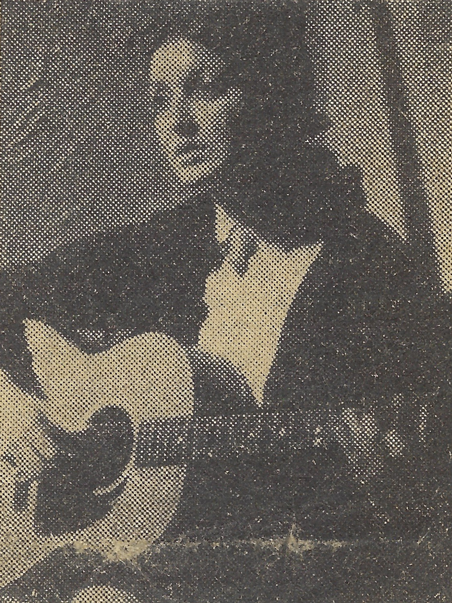
It’s a photo of my mum taken by a professional photographer, way back in the day, playing guitar and singing at a folk club. This has been my favourite photo of her since I was a little kid, and this low-res reproduction is the only version I’d ever seen. In an idle moment, I wondered whether anyone in the city where mum used to live might know the photographer who took this picture, and whether that photographer might still have the negative or an original print.
It was the longest of long shots, but (with my mum’s permission) I posted the photo to Mastodon, explaining what I knew about where and when the photo was taken, and asked whether anyone might have a lead to help me find the photographer.
Less than an hour later one of my Mastodon mutuals, a person I’ve never once met offline and whose real name I don’t even know, replied that she knew someone who was very involved in the folk scene in that city at the right time. She would ask him if he had any ideas.
Not only did he have ideas; he had the photograph.
Here’s what happened. The folk club in question had a wall of photos of their regular singers. When the place closed down in the early 1970s, someone found all those photos in a skip outside the building, rescued them, and gave them to my Mastodon friend’s friend. That friend-of-an-online-friend kept the photos for fifty years and, when the internet somehow facilitated a one-in-a-million connection, generously gave this particular one up to someone who would treasure it. So today, the photo that my mum autographed when she was seventeen I’ve removed the autograph from the version posted below. Mum does have a name, but if I tell you what it is I’ll apparently have to kill you. *shrug* I don’t make the rules., that was pinned to the wall in a nineteen-seventies folk club, and that was rescued from a skip by absolute chance, dropped through my letterbox. After over forty years, I finally have a new favourite image of my mother, and it is so much better than the grainy halftone newspaper reproduction.
None of this could have happened without the open web. It couldn’t have happened without the free and open-source software movement that made Mastodon possible. And it couldn’t have happened without the online communities of people who may never know each other’s legal names, but who care about each other just as much as they care about their real-life neighbours and colleagues and friends.
Online communities are worth protecting. They’re valuable, and real, and they offer so many new ways for people to share and support and seek out connections that are impossible or impractical in the offline world: whether it’s a trans kid living in a conservative community; or a person with mobility issues whose opportunities to socialize in person are limited; or someone who wants to use her endangered language as often as she can; or someone wanting to leave an abusive relationship who has been isolated from offline friends and family; or a young man who needs evidence-based sexual health information when all he gets at school is religious propaganda; or someone who has moved thousands of miles from her family and wants to see her siblings’ faces more than once a year; or someone with a rare illness looking for empathy and advice; or an autistic person who finds offline socializing exhausting; or someone looking for the one person in the world who still has a copy of her favourite photograph of her mother.
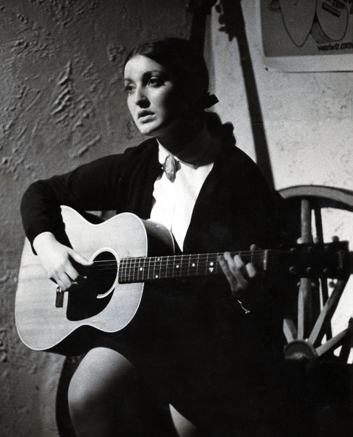
I love this photo because it captures something that has been one of the most important, persistent threads woven through my relationship with mum. Here she is, at seventeen, doing something that defines her in my mind: sharing music. Holding this photograph in my hands feels almost miraculous; and I’m holding it in my hands because of the open web, and the FOSS movement, and the humans who believe in the reality of online communities.
For the photograph, and for so much else: